Thinking about buying a fixer in La Jolla? The opportunity can be real, but so can the risk. In a community where most of the land is already built out, the best remodel plays are usually not about finding a blank slate. They are about spotting the homes with the right layout, site, and approval path before everyone else does. If you know what to look for, you can separate a smart value-add purchase from a project that becomes far more complicated than expected. Let’s dive in.
Why remodel potential matters in La Jolla
La Jolla stands out because it is a primarily residential coastal community within the City of San Diego, and it is about 99% built out. That means most opportunity comes from reworking existing homes, adding to them, or improving how they live rather than building on undeveloped land.
That built-out reality changes how you should evaluate a property. In La Jolla, remodel potential is often tied less to trendy finishes and more to whether the site, floor plan, and local review process support meaningful improvement.
The setting also plays a big role. La Jolla includes ocean bluffs, beaches, steep canyons, hillsides, and Mount Soledad, so no two lots function exactly the same way. A home can look dated on the surface and still offer strong upside if the property itself gives you room to improve layout, light, privacy, and outdoor use.
Start with how the home lives
A design-savvy buyer should look beyond listing photos. A house that feels awkward day to day may actually offer better remodel potential than one that already looks polished but is heavily customized in ways that are hard to improve.
In practical terms, some of the best candidates are homes with isolated kitchens, choppy circulation, undersized primary suites, or weak connections to patios, terraces, or yards. Those issues can sometimes be improved without turning the project into a full rebuild.
This matters in La Jolla because the lifestyle is closely tied to daylight, indoor-outdoor flow, and usable exterior space. San Diego’s mild coastal climate helps explain why these features matter so much to buyers in this area.
Layout problems can create opportunity
When a home has a workable footprint but an outdated layout, you may have room to create value. Opening sightlines, improving circulation, and making better use of existing square footage can change how large and functional a property feels.
That is often more attractive than paying a premium for a house that already has expensive finishes but limited flexibility. In a built-out market like La Jolla, smart reconfiguration can be where real upside lives.
Look for natural light and flow
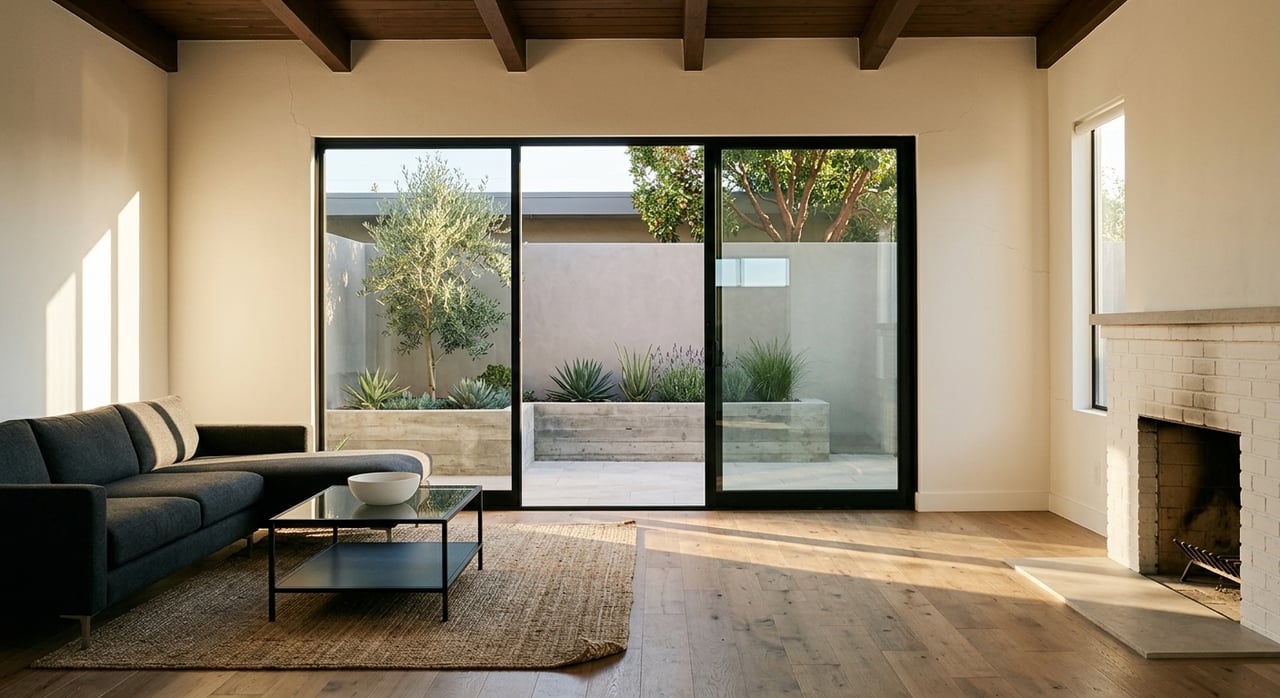
Orientation matters in La Jolla. Homes with good sun exposure, well-placed windows, and a natural connection to outdoor areas can often feel significantly better after a renovation, even without a major increase in size.
If the house already has the raw ingredients for light, privacy, views, or better outdoor access, the remodel path may be more compelling. Those qualities are hard to fake later if the site does not support them.
Evaluate the lot, not just the house
In La Jolla, the site can be just as important as the structure. Because of the community’s hillsides, bluffs, canyons, and varied lot conditions, buildability and access can vary widely from one property to the next.
A home with a flexible site may support a better addition, a more functional entry sequence, or stronger indoor-outdoor use. On the other hand, a constrained lot can limit your options even if the current house looks easy to update.
Driveway approach, slope, yard depth, and overall shape all matter. If you are comparing two remodel candidates at a similar price point, the better site may be the better long-term buy.
A dated exterior is not always a red flag
It is easy to dismiss a home because the exterior feels tired. In many cases, that can actually be a positive sign if the underlying lot and improvement path are sound.
What matters more is whether the project stays in remodel territory or starts drifting into something much larger. In the Coastal Overlay Zone, the City provides specific guidance tied to demolishing or removing 50% or more of existing exterior walls, so the scope of work can affect the approval path in a major way.
Know the local rules before you fall in love
Every San Diego property has a zoning designation, and overlay zones can add another layer of rules. In La Jolla, this is one of the biggest reasons a promising remodel opportunity needs deeper due diligence.
Before you assume a home can be expanded or significantly reworked, you should verify the zoning and parcel details through the City’s zoning resources, mapping tools, ZAPP zoning and parcel portal, and, when needed, a Zone History Letter. That letter can confirm past and current zoning and land-use regulations and may also point to prior entitlements and redevelopment rights.
A title report may reveal additional restrictions as well. Taken together, these steps can give you a clearer picture of what is realistic before you commit.
Coastal rules can change the path
The Coastal Overlay Zone is one of the most important factors for many La Jolla homes. The City states that a project in the Coastal Overlay Zone may require a Coastal Development Permit before a construction permit is issued.
The review path can also differ depending on whether a property is in the appealable or non-appealable area. In simple terms, two homes that seem similar on paper may have very different approval timelines and complexity depending on location.
Some coastal areas also fall under a supplemental Coastal Height Limit Overlay Zone. If a property is near the ocean, a bluff edge, or the first public roadway, the entitlement path may be materially different than one farther inland.
La Jolla subareas can have different processes
Not every part of La Jolla works the same way. For example, La Jolla Shores has its own Planned District Ordinance Advisory Board, which is a reminder that subarea-specific review can matter.
That is why local property research is so important. A remodel strategy that seems straightforward in one part of La Jolla may require a different review process in another.
Historic review is another key checkpoint
Historic-resource screening should be part of your early diligence, especially in a community with well-documented architectural history like La Jolla. The City’s historical-resources program uses surveys and a database to identify potentially significant places.
The City notes that historical surveys inventory properties that are at least 45 years old and retain reasonable architectural integrity. If a home may have historic-review implications, major exterior changes may not be as simple as they first appear.
Ask better remodel questions
When you tour a property, your goal is not just to decide whether you like it today. Your goal is to understand whether the house can become meaningfully better without taking on hidden approval or construction risk.
Here are some useful questions to ask as you evaluate a La Jolla home:
- Does the current layout waste square footage?
- Is there a better connection to the yard, terrace, or view?
- Does the lot shape or slope support an addition or reconfiguration?
- Is the property in the Coastal Overlay Zone?
- Could historic-resource review affect future plans?
- Would the likely scope stay below a rebuild-level threshold?
- Is there potential for an ADU or JADU on the site?
San Diego requires a building permit for ADUs and JADUs, and coastal-overlay properties may also need coastal-development review depending on scope and location. That makes early feasibility review especially important if you see accessory-unit potential as part of the value.
Bring in the right experts early
A good remodel purchase is not just about vision. It is about verifying that the vision is feasible, appropriately priced, and aligned with local rules.
A home inspection is the first step in separating cosmetic upside from expensive hidden problems. Roof issues, structural concerns, drainage problems, moisture intrusion, or outdated systems can quickly change the economics of a deal.
An architect becomes especially helpful when the real question is feasibility. If you need to know whether the floor plan can be improved, whether an addition fits the site, or how coastal, zoning, or historic issues shape the concept, early architectural input can save you from making the wrong purchase.
Contractor input matters too. Under California law, a valid contractor license is required for work that requires a building permit or for jobs valued at $1,000 or more in labor and materials. The Contractors State License Board also recommends checking license status, insurance, and written bids before hiring.
For multi-trade remodels, a general building contractor can coordinate specialty subcontractors as needed. For buyers, that means pre-contingency pricing can be one of the smartest ways to test whether a project still makes sense in the real world.
A practical due-diligence sequence
If you want to reduce risk, the order of your research matters. A smart sequence can help you avoid paying for upside that disappears once local rules and construction costs come into focus.
A practical approach looks like this:
- Evaluate the site and layout first.
- Verify zoning and overlay status second.
- Check coastal and historic constraints third.
- Bring in inspector, architect, and contractor input before removing contingencies.
This process is especially valuable in La Jolla, where built-out conditions and layered review processes can make feasibility more important than first impressions.
The best remodel opportunities are rarely obvious
In La Jolla, the strongest value-add opportunities are often the homes that other buyers misunderstand. They may look dated, closed off, or underwhelming at first glance, but the site, orientation, and layout may support a far better end result than the market initially sees.
That is where a calm, design-aware buying strategy matters. When you combine local property research with disciplined analysis, you can spot homes with real remodel potential and avoid the ones that only look promising on the surface.
If you are exploring La Jolla homes and want a strategic read on remodel upside, off-market options, or the local diligence process, The Quesada Group can help you evaluate opportunities with clarity and confidence.
FAQs
What makes a La Jolla home a strong remodel candidate?
- A strong candidate usually has a workable site, an improvable layout, and a realistic permit path for the changes you want to make.
What should you check before remodeling a home in La Jolla?
- You should verify zoning, overlay zones, possible coastal-review requirements, historic-resource implications, and the likely construction scope before moving forward.
Why does the Coastal Overlay Zone matter for La Jolla remodels?
- The Coastal Overlay Zone may require a Coastal Development Permit before a construction permit is issued, and the review path can vary by location.
Can older homes in La Jolla face historic-review issues?
- Yes. The City’s historical-resources program identifies potentially significant properties, and homes that are at least 45 years old with reasonable architectural integrity may warrant closer review.
Should you get contractor pricing before removing contingencies on a La Jolla fixer?
- Yes. Early pricing and feasibility input can help you understand whether the remodel scope, timeline, and cost still support the purchase.