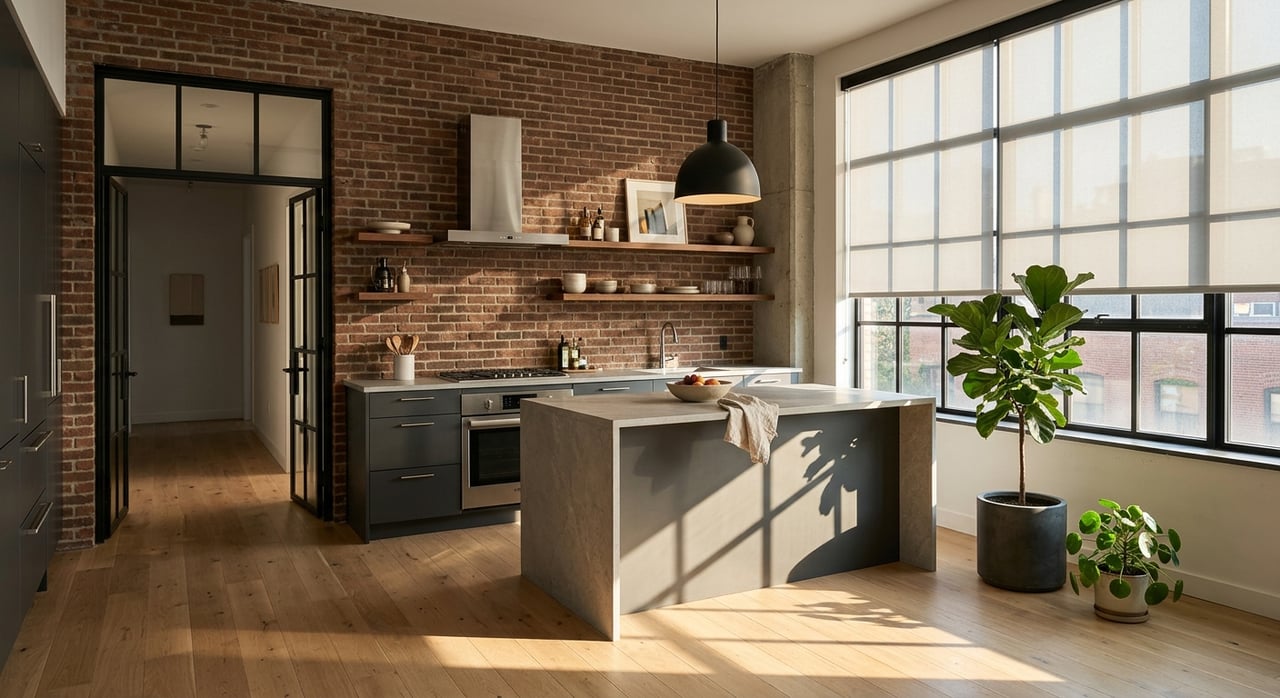
If you are getting ready to sell a loft in West Loop, you are not just listing square footage. You are presenting volume, light, texture, and the kind of industrial character that draws buyers to this part of Chicago in the first place. When the market is moving quickly, the sellers who stand out are usually the ones who prepare with intention. Let’s dive in.
Why West Loop loft prep matters
West Loop is a distinct loft market, not a one-size-fits-all condo market. The neighborhood is known for its industrial history, walkability, and access to downtown and the riverfront, and many loft buildings feature masonry construction, heavy timber elements, expansive windows, and ceilings that often range from 10 to 14 feet.
That matters because buyers are often responding to the architecture as much as the floor plan. In a loft, the feeling of scale, openness, and natural light can shape a first impression fast. Your prep should help those features read clearly in person and online.
Know the current West Loop market
As of May 2026, West Loop is widely described as a seller’s market. Realtor.com reported 198 active listings, a median listing price of $475,000, a median 24 days on market, and a 102% sale-to-list ratio.
Redfin showed a similarly competitive trend, with a median sale price of $515,000 over the prior three months, up 6.2% year over year, and a median sale price per square foot of $414. The exact figures vary by source, but the bigger takeaway is clear: strong presentation and disciplined pricing still matter, even in a favorable market.
Let the loft architecture lead
Many West Loop industrial buildings were originally designed with open layouts, large windows, and tall ceilings that still appeal to buyers today. That means your goal is not to over-style the home. It is to create enough visual calm that buyers can immediately notice the scale and character of the space.
If your loft has exposed brick, timber, steel, or long sight lines, avoid blocking those features with too much furniture or decor. In most cases, a cleaner and more restrained setup helps the home feel larger, brighter, and more memorable.
Start with decluttering and cleaning
Before you think about photos or showings, start with the basics. According to the National Association of Realtors, staging includes cleaning, decluttering, repairing, depersonalizing, and updating a home so buyers can picture themselves living there.
That guidance is especially useful in a loft. Open spaces tend to show everything, and the camera can magnify clutter, awkward furniture placement, and visual noise.
Focus first on these prep steps:
- Remove extra furniture that interrupts flow
- Clear kitchen counters and open shelving
- Store personal items, cords, and small decor pieces
- Clean windows, walls, floors, and lighting fixtures
- Refresh any areas where dust or wear is easy to spot
In a loft with big windows and tall ceilings, clean surfaces and open views do a lot of work for you.
Prioritize the rooms buyers notice most
Not every room carries the same weight when you list. In NAR’s 2025 Profile of Home Staging, 83% of buyers’ agents said staging made it easier for buyers to visualize a property as a future home.
That same report found the most important spaces to stage were:
- Living room: 37%
- Primary bedroom: 34%
- Kitchen: 23%
For a West Loop loft, the main living area usually deserves the most attention. It is often where the ceiling height, window line, and open plan make the biggest impact.
Stage the living area first
Your living space should feel open, usable, and easy to understand. Buyers should be able to walk in and immediately see where seating, dining, and work areas fit without feeling crowded.
Try removing one or two pieces of furniture if the room feels tight on camera. A loft often shows better when the layout is simple and the eye can move easily across the room.
Keep the primary bedroom calm
The primary bedroom should feel restful and uncluttered. Keep bedding simple, clear off dressers and nightstands, and reduce anything too personal or overly styled.
In a loft, bedrooms can sometimes feel more exposed or compact than the main living area. A clean, minimal approach can help the space feel more intentional and comfortable.
Clean up the kitchen finish
You do not usually need a full kitchen remodel before listing. NAR’s consumer guidance points more toward cleaning, decluttering, and selective cosmetic improvements rather than major renovation.
That means your kitchen prep may be as simple as clearing counters, cleaning cabinet fronts, replacing burnt-out bulbs, and making sure finishes look crisp under natural and overhead light.
Make minor updates that sharpen the space
Most sellers do not need a major overhaul to get ready for market. In many cases, the best updates are the small ones that improve finish level and light quality.
Focus on details that buyers will notice quickly:
- Replace burnt-out bulbs
- Clean or update light fixtures if needed
- Remove yellowed lampshades
- Touch up marked walls
- Address obvious minor wear
NAR also recommends understanding the cost of significant repairs, even if you choose not to complete them before listing. That gives you a clearer sense of what buyers may raise during negotiation.
Get the lighting right for photos
Lofts live and die by light in listing photos. NAR’s photo guidance recommends opening blinds to let in natural light and notes that clutter and poor furniture arrangement tend to look worse on camera.
Because West Loop lofts often feature expansive windows, the goal is usually to show depth, brightness, and ceiling height. Photos should help buyers feel the volume of the home without making rooms look distorted.
A few simple choices can help:
- Open blinds fully unless glare is a problem
- Turn on lamps and overhead lights with matching bulbs
- Use warm or bright-white 60-watt bulbs where appropriate
- Remove visual distractions before the shoot
- Keep furniture placement balanced and simple
NAR also notes that dusk or overcast conditions can sometimes help avoid a washed-out look. The right timing depends on how light moves through your unit, which is why planning the shoot matters.
Treat the visual launch as a sales strategy
Most buyers begin online, so your photography and media package are not secondary details. They are central to how your loft enters the market.
NAR reports that high-resolution photos and video tours are a must, and its 2025 staging findings showed photos were important to 73% of buyers’ agents’ clients, while videos were important to 48% and virtual tours to 43%.
For a West Loop loft, that means your launch should aim to capture:
- The scale of the main living area
- Natural light from large windows
- Ceiling height and architectural volume
- Original industrial details
- A clean, believable sense of how the space lives
The best marketing for this type of home is usually polished and restrained. Buyers do not need heavy styling. They need to see the space clearly.
Consider a pre-listing inspection
A pre-sale inspection is not required, but it can be useful. NAR notes that it can identify issues you may want to repair before showings and can also serve as a differentiator for the property.
For some sellers, this step creates more control. Instead of reacting to surprises after a contract is in place, you can decide in advance what to fix, what to disclose, and how to prepare for buyer questions.
Start prep earlier than you think
Many sellers underestimate how long prep takes. Realtor.com’s 2026 Best Time to Sell report found that 53% of sellers took one month or less to get ready to list.
In the Chicago-Naperville-Elgin metro, the peak week to list in 2026 began March 22, which was earlier than the national best week of April 12 to 18. The lesson is simple: if you want flexibility around timing, staging, and photography, it helps to start well before your target list date.
Follow a smart launch sequence
In a market like West Loop, preparation works best when each step supports the next one. A calm, coordinated launch can help your loft hit the market looking complete from day one.
A practical sequence looks like this:
- Declutter and depersonalize
- Complete cleaning and minor repairs
- Decide whether to do a pre-listing inspection
- Refine furniture placement and staging
- Schedule photography when the unit shows at its brightest
- Go live only when all marketing assets are ready
That kind of rollout supports stronger first impressions, which matters in a neighborhood where buyers are moving quickly and often paying close to asking price.
Sell the space, not the stuff
When you prepare your West Loop loft for sale, the goal is not to make it look busy or heavily decorated. The goal is to reveal what buyers came to see: openness, light, texture, and livability.
A thoughtful prep plan can help your listing feel sharper, photograph better, and enter the market with more confidence. If you want a calm, strategic plan for positioning your loft for today’s West Loop buyers, The Quesada Group can help you prepare and launch with precision.
FAQs
What matters most when selling a West Loop loft?
- The biggest priorities are usually showcasing natural light, ceiling height, open layout, and original loft character while keeping clutter low and presentation clean.
Do you need a full remodel before listing a West Loop loft?
- Usually no. Seller guidance from NAR emphasizes cleaning, decluttering, and selective cosmetic improvements more than major renovation.
Which rooms should you stage before selling a West Loop loft?
- The rooms that tend to matter most are the living room, primary bedroom, and kitchen, based on NAR’s 2025 staging data.
Is a pre-listing inspection required before selling a West Loop loft?
- No. A pre-listing inspection is optional, but it can help identify issues before showings and reduce surprises later.
When should you start preparing a West Loop loft for sale?
- Starting at least a month ahead is common, and earlier is often better if you want time for decluttering, repairs, staging, and photography.
Why are listing photos so important for a West Loop loft sale?
- Because many buyers shop online first, strong photos, video, and virtual tour assets help show the loft’s light, scale, and layout before a buyer ever schedules a showing.